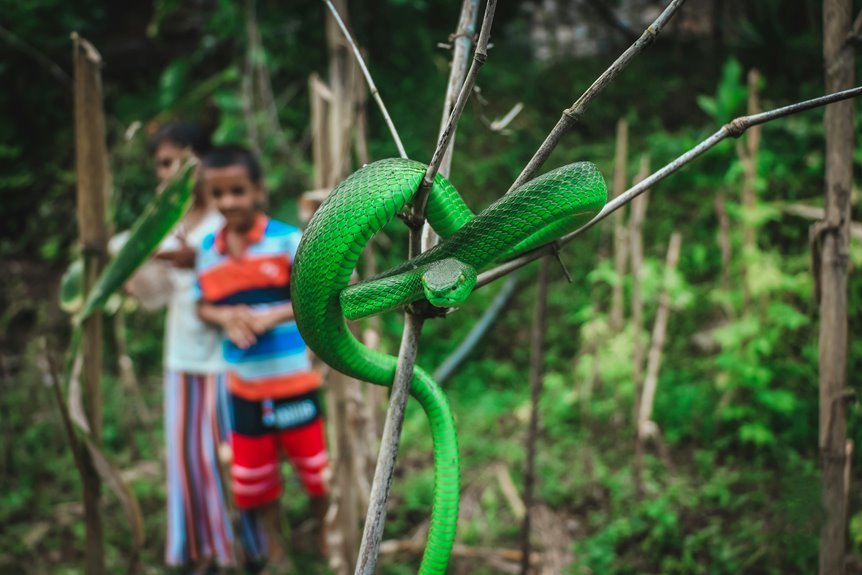
The World’s Most Dangerous Snake
The Inland Taipan, recognized as the world’s most dangerous snake, possesses venom that is extraordinarily lethal. Its habitat spans the arid terrains of Australia, particularly in Queensland. This snake’s unique coloration and smooth scales enhance its predatory efficiency. Understanding its behavior and ecological role is crucial for appreciating its significance in the ecosystem. However, the challenges it faces for survival raise important questions about conservation efforts. What might these challenges reveal about broader environmental issues?
Characteristics of the Inland Taipan
The Inland Taipan, scientifically known as *Oxyuranus microlepidotus*, is recognized as the most venomous snake in the world. Its venom potency is unmatched, containing neurotoxins that can incapacitate prey rapidly.
Physically, it exhibits a distinct coloration, typically ranging from light brown to olive green, with smooth, glossy scales that contribute to its streamlined appearance, facilitating swift movement within its arid environment.
Habitat and Distribution
Habitat and distribution of the Inland Taipan are primarily confined to the arid regions of Australia, specifically within the semi-desert areas of Queensland’s Channel Country and parts of the Northern Territory.
The species predominantly inhabits habitat types characterized by sparse vegetation and clay soils, enabling it to thrive within its limited geographical range, which is essential for its survival and reproductive success.
Behavior and Feeding Habits
Although primarily known for its potent venom, the Inland Taipan also exhibits intriguing behavior and feeding habits that contribute to its status as a top predator in its environment.
Its hunting strategies involve quick strikes and ambush tactics, optimizing the effectiveness of its venom composition. This lethal adaptation allows the Inland Taipan to efficiently subdue prey, primarily small mammals, ensuring its survival in harsh conditions.
Conservation Efforts and Challenges
As conservationists strive to protect the Inland Taipan, numerous challenges arise that complicate efforts.
Effective conservation strategies must address habitat protection amid land development pressures and climate change. Limited funding and public awareness further hinder initiatives aimed at sustaining populations.
Collaboration with local communities is essential, yet often overlooked, complicating the execution of protective measures vital for the survival of this enigmatic species.
Conclusion
In conclusion, the Inland Taipan stands as a testament to nature’s extremes—exhibiting both unparalleled venom potency and remarkable ecological importance. As a master predator, it regulates small mammal populations, maintaining ecological balance. However, its survival faces challenges amid habitat loss and human encroachment. Protecting this enigmatic serpent is crucial, not only for preserving biodiversity but also for safeguarding the intricate web of life that thrives within its arid Australian habitat.